4-Ingredient Poor Man’s Caramel Fudge – Easy Old-Fashioned Homemade Fudge
4-Ingredient Poor Man’s Caramel Fudge – Easy Old-Fashioned Homemade Fudge
Some desserts bring back memories of old-fashioned kitchens, handwritten recipe cards, and sweet treats made with simple pantry ingredients. This 4-Ingredient Poor Man’s Caramel Fudge is one of those timeless recipes. It doesn’t require expensive chocolate, condensed milk, or a long list of specialty ingredients. Just brown sugar, whole milk, butter, and vanilla come together to create a rich, buttery caramel-flavored fudge.
What makes this recipe especially interesting is the traditional candy-making method. Instead of simply melting everything together, you cook the mixture until it reaches the soft-ball stage. Then, after a short cooling period, you beat it until it thickens and loses its glossy appearance. This process helps the fudge set into delicious little squares with a smooth, creamy texture.
The flavor is wonderfully nostalgic. Brown sugar gives the fudge its deep caramel-like sweetness, butter adds richness, and vanilla brings everything together. Each bite is sweet, buttery, and satisfying.
This homemade caramel fudge is lovely for Christmas candy trays, holiday gifting, family gatherings, or an afternoon treat with coffee. It does require a little attention while cooking, but the ingredient list is wonderfully short. If you enjoy old-fashioned homemade candy, this is a recipe worth keeping!
4-Ingredient Poor Man’s Caramel Fudge
This traditional brown sugar fudge is made on the stovetop using four simple ingredients. The mixture is cooked to the soft-ball stage, cooled briefly, and beaten until thick enough to spread into a pan.
Ingredients
- 2 cups packed brown sugar
- 1/2 cup whole milk
- 4 tablespoons butter
- 1 teaspoon vanilla extract
How to Make 4-Ingredient Poor Man’s Caramel Fudge
Step 1: Prepare the Pan
Butter an 8-inch square pan or small glass casserole dish.
Set it aside.
This is one of those recipes where having your pan ready before you begin really matters. Once the fudge reaches the right consistency, you’ll want to move fairly quickly.
Step 2: Combine the Ingredients
Add the brown sugar, whole milk, and butter to a heavy saucepan.
Place the saucepan over medium heat.
Stir steadily as the butter melts and the sugar dissolves.
The mixture should become smooth and glossy.
Step 3: Bring It to the Soft-Ball Stage
Allow the mixture to come to a gentle boil.
Continue cooking, stirring frequently, until it reaches approximately 234–240°F (112–116°C).
This is the soft-ball stage, and it’s the key to getting fudge that sets properly.
If you have a candy thermometer, use it. It makes this step much easier.
No Candy Thermometer?
You can use the cold-water test.
Drop a small amount of the hot mixture into cold water. When ready, it should form a soft ball that holds together but flattens easily when lifted.
Be extremely careful when working with the hot candy mixture.
Step 4: Add the Vanilla
Once the mixture reaches the correct temperature, remove the saucepan from the heat.
Stir in the vanilla.
The mixture will be extremely hot, so take care while stirring.
Step 5: Let It Cool Briefly
Allow the mixture to sit undisturbed for approximately 5–10 minutes.
It should cool slightly and begin to thicken.
Don’t rush straight into vigorous beating while it’s piping hot.
Step 6: Beat the Fudge
Using a wooden spoon, beat the mixture until it begins losing its glossy appearance.
You’ll notice it becoming thicker and creamier.
This is the part where timing matters. Once the fudge starts to set, you need to work fairly quickly.
Step 7: Spread It Into the Pan
Immediately transfer the thickened fudge to the prepared pan.
Use a spatula or the back of a spoon to spread it into an even layer.
Step 8: Cool and Cut
Allow the fudge to cool completely.
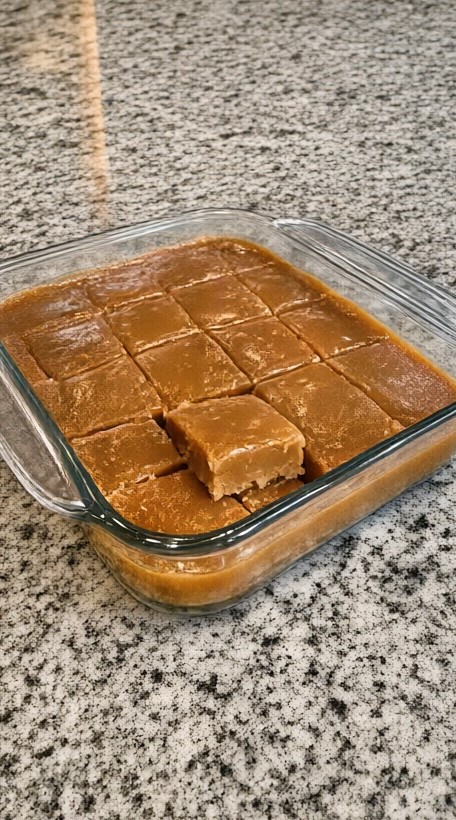
Once it has fully set, cut it into approximately 16 small squares.
Why You’ll Love This Old-Fashioned Caramel Fudge
Only four ingredients: You don’t need chocolate chips, marshmallow creme, or sweetened condensed milk. The simple combination of brown sugar, milk, butter, and vanilla creates the signature caramel flavor.
Rich brown sugar flavor: Brown sugar gives this fudge a deep sweetness with warm caramel and butterscotch-like notes.
A traditional homemade candy: Cooking the mixture to the soft-ball stage and beating it by hand gives this recipe its old-fashioned character.
Perfect for sharing: The recipe makes approximately 16 small squares, making it a lovely addition to holiday candy plates and homemade gift boxes.
No special decorating required: Once the fudge has set, simply cut it into squares. Its rich caramel color and creamy texture are beautiful on their own.
Important Tips for Perfect Caramel Fudge
Traditional fudge can be a little more delicate than ordinary cookie or cake recipes. Temperature, cooling, and beating all affect how the finished candy sets. These tips can help you get better results.
Use a Heavy-Bottomed Saucepan
A heavy saucepan helps distribute heat more evenly and reduces the risk of hot spots that can scorch the sugar mixture.
Choose a pan large enough to allow the mixture to bubble without overflowing. Keep your attention on the saucepan while the mixture cooks.
Measure the Temperature Carefully
The soft-ball stage is one of the most important parts of this recipe. The mixture should reach approximately 234–240°F (112–116°C), as specified in the instructions.
A candy thermometer makes it easier to monitor the temperature. Make sure the thermometer is positioned in the mixture without touching the bottom of the saucepan, as direct contact with the pan can give an inaccurate reading.
Be Careful with Hot Sugar
Boiling sugar mixtures become extremely hot and can cause serious burns. Avoid tasting the mixture while it is hot, and never touch it with your fingers.
Keep children and pets away from the cooking area. When using the cold-water test, carefully drop a small amount of the mixture into the water using a spoon.
Allow the Mixture to Cool Briefly
After adding the vanilla, give the mixture the recommended 5–10 minutes to cool slightly.
This short resting period matters because beating the mixture while it is extremely hot can make it difficult to reach the right consistency. On the other hand, waiting too long may allow it to set before you can spread it into the prepared pan.
Watch for the Change in Appearance
During beating, the fudge gradually changes from glossy and fluid to thicker and less shiny. This visual change is a useful sign that the mixture is approaching the setting stage.
Once it thickens, transfer it to the prepared pan promptly. It can become difficult to spread if you wait too long.
Prepare Everything Before Cooking
Have your buttered pan, wooden spoon, spatula, and vanilla ready before you start. Candy-making moves quickly once the correct temperature is reached, and preparing ahead makes the process much easier.
What Does the Soft-Ball Stage Mean?
The soft-ball stage is a temperature point used in traditional candy-making. It occurs when a cooked sugar mixture reaches a concentration that allows a small amount dropped into cold water to form a soft ball.
For this recipe, that temperature is approximately 234–240°F (112–116°C).
The cold-water test provides a traditional way to check the stage without a thermometer. The mixture should form a soft ball that holds together but flattens easily when lifted.
Getting this stage right is important because the cooking temperature affects how the fudge sets after beating and cooling. If the mixture doesn’t reach the proper temperature, the fudge may remain too soft. If it cooks too far, the finished candy may become overly firm or crumbly.
How to Serve Poor Man’s Caramel Fudge
These little caramel fudge squares are delicious served on their own, but they also make a lovely addition to a dessert table.
Here are a few ways to enjoy them:
- With coffee: The buttery caramel flavor pairs beautifully with a cup of hot coffee.
- With tea: Serve a small square alongside black tea or your favorite herbal tea.
- On a holiday candy tray: Arrange the fudge with chocolate fudge, peanut butter balls, cookies, and other homemade sweets.
- As homemade gifts: Place completely cooled squares in small food-safe boxes or treat bags for friends and family.
- After dinner: Serve one or two small pieces when you want something sweet without preparing a large dessert.
Because the fudge is quite sweet and rich, small squares are usually enough to satisfy a sweet craving.
Easy Variations to Try
The original recipe has a lovely old-fashioned caramel flavor, but you can experiment with a few optional additions.
Add chopped pecans or walnuts: Stir in a small amount of chopped nuts after beating, just before spreading the fudge into the pan. Nuts add a pleasant crunch and complement the brown sugar flavor.
Finish with flaky salt: A light sprinkle of flaky sea salt over the top can balance the sweetness and create a sweet-and-salty caramel flavor.
Add extra vanilla aroma: If you enjoy a stronger vanilla flavor, you can experiment with a little additional vanilla extract. Keep the original amount for the classic version.
Make smaller pieces: Cut the fudge into smaller squares for a candy platter or gift box. This is especially useful when serving several different desserts.
These are optional ideas, not part of the original four-ingredient recipe.
How to Store Homemade Caramel Fudge
Allow the fudge to cool completely and set before cutting and storing it.
Place the squares in an airtight container, separating layers with parchment or wax paper to help prevent them from sticking together. Store in a cool, dry place away from direct sunlight and heat.
If your kitchen is particularly warm, refrigeration can help the fudge maintain its shape. Keep it in a tightly sealed container so it doesn’t absorb moisture or other refrigerator odors. Let chilled pieces sit briefly at room temperature before serving for a softer bite.
Can You Freeze Poor Man’s Caramel Fudge?
Yes, fudge can generally be frozen for longer storage. Once fully set and cut into squares, place the pieces in a freezer-safe airtight container with parchment paper between layers.
Thaw the fudge in the refrigerator or at room temperature while still protected in its container. This helps reduce condensation forming directly on the candy.
Frequently Asked Questions
1. Why didn’t my caramel fudge set?
One common reason is that the mixture did not reach the soft-ball stage. For this recipe, it should reach approximately 234–240°F (112–116°C). Temperature accuracy is important in traditional fudge-making. Beating and cooling also affect the final texture.
2. Can I make this fudge without a candy thermometer?
Yes. The cold-water test can be used instead. Drop a small amount of the hot mixture into cold water. It should form a soft ball that holds together but flattens easily when lifted. Take care when handling the hot mixture.
3. Why did my fudge become grainy?
Graininess can happen when sugar crystals form during cooking or when the mixture is handled in a way that encourages crystallization. Stir steadily while the sugar dissolves, use a clean saucepan, and follow the temperature and cooling instructions carefully.
4. How many pieces does this recipe make?
The recipe makes approximately 16 small squares when spread in an 8-inch square pan and cut into even portions. You can cut smaller pieces if you’re preparing a holiday candy platter.
A Sweet Old-Fashioned Treat Worth Saving
This 4-Ingredient Poor Man’s Caramel Fudge is a lovely reminder that some of the best homemade sweets don’t need complicated ingredients. Brown sugar, whole milk, butter, and vanilla create a rich caramel-like flavor in a traditional stovetop fudge.
It takes a little patience to reach the right temperature and beat the mixture to the proper consistency, but the result is a batch of sweet, buttery squares that are perfect for sharing.
Make it for Christmas, add it to a homemade candy assortment, or enjoy a small piece with your afternoon coffee. If you love old-fashioned recipes made with simple pantry staples, this caramel fudge is one to keep close!